


_edited.jpg)


Turnkey Home Decoration

What turnkey luxury home decoration truly means
In its simplest sense, it is a process where the client does not buy just furniture or just a design concept, but a complete space-shaping experience. This includes the interior concept, material selection, color palette, lighting, furniture, decor, layout, often coordination with contractors, and even final styling before move-in.
But in the luxury segment, the meaning is deeper. Here, it is not just about getting the job done. It is about executing the space with consistency, tact, and a sense of the life of the person who will inhabit it. Luxury is not excess. Luxury is when nothing feels accidental.
This is especially important in large apartments, villas, and residences, but also in smaller high-value spaces where every squa"re meter must have a purpose. In such projects, good design is not meant to impress only at first glance. It must last, make daily life easier, and retain its integrity even when the space is truly lived in.
Why clients choose the turnkey model
The most common reason is time, but it is not the only one. People investing in a high-end interior usually do not want to be managers of their own project. They do not want to coordinate a carpenter, lighting supplier, stone mason, and decorator, nor spend weekends deciding between three similar shades of beige. They want the certainty that everything entering the space belongs to the same story.
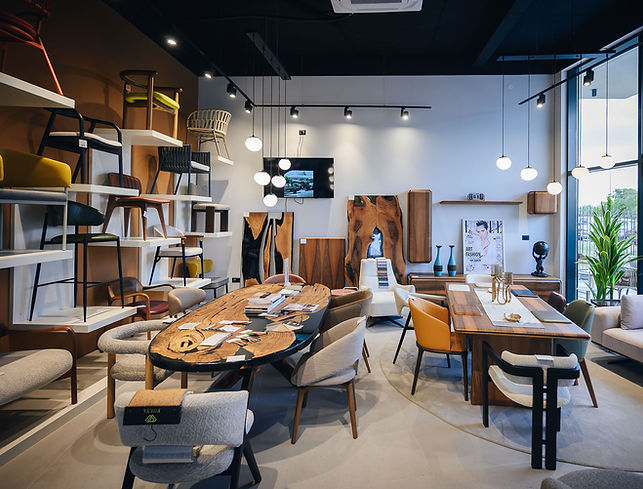
Another reason is quality control. When one team leads the entire process, it is easier to maintain a standard in every layer of the project. The sofa's proportion matches the ceiling height. The dining table dialogues with the lighting above it. Textures do not compete with each other but build an atmosphere. This is the difference between a furnished space and a space with identity.
The third reason is financial rationality, as unexpected as that may sound at first in the luxury segment. Partial decisions often lead to costly corrections. Wrong measurements, too many decorative elements, mismatched wood tones, or lighting that looks good on the plan but poor in the evening – all of this later costs more than a carefully guided project from the very beginning.
What the process looks like without excess complication
A good project begins with a conversation that is not merely aesthetic. It is important to understand how the client lives, hosts guests, works from home, rests, which habits they want to keep and which to improve. A luxury interior should not be a stage. It should be an extension of character and life rhythm.
After that comes the concept. Here, the visual direction of the space is defined, along with its emotional tone. Should the home feel calm and contemplative, representative and ceremonial, warm and family-oriented, or subtly hotel-like? The difference is enormous, even if from the outside it may all seem to come down to choosing beautiful pieces.
Next come materials, furniture, and spatial layout. In this phase, the difference between luxury as an impression and luxury as an experience becomes most apparent. Natural stone may look impressive, but not every stone will suit daily use. Velvet adds depth to a space, but it is not always ideal for homes with small children or pets. Open shelves can look exceptionally elegant, but they require maintenance discipline. Therefore, a true premium approach never ignores real life.
Finally comes execution and final installation. This is the moment when project discipline becomes visible. Lighting is properly layered, curtains have the exact fullness, decor is not randomly arranged, and the space looks complete, not just furnished. It is precisely this final level that distinguishes an average result from a home that leaves an impression of peace and certainty.
Turnkey luxury home decoration and the question of personal style
One common misconception is that a turnkey service implies a uniform type of luxury. On the contrary. The best projects do not resemble each other, because they arise not from templates but from a careful reading of the space and the person.
Someone wants contemporary minimalism with tactile materials and a quiet tonal palette. Someone else seeks classical proportions, richer textures, and more pronounced formality in the living area. A third person wants a blend of Mediterranean warmth and urban luxury, with accents that bring character without theatricality. All of these are legitimate directions, if implemented consistently.
Personal style is not built by accumulating statement pieces. Much more often, it arises from control. From the ability to know where the space should speak louder and where it should remain quiet. This is where design maturity is recognized.
Where luxury is most often misunderstood
The most common mistake is equating luxury with quantity. More shine, more decoration, more expensive surfaces – and less peace. Such an interior may look impressive in a photograph, but in daily life it quickly becomes tiring.
The second mistake is relying solely on trends. A trend can be useful as a reference, but it must not be the foundation of a high-value project. A home meant to last is not built around a fleeting fascination. It is built around proportion, material quality, and meaningful layering of elements.
The third mistake is neglecting function. In a luxury interior, everything must work quietly and precisely. Movement through the space should be natural. Storage should be discreet but sufficient. Lighting should be adaptable. Comfort should be present, even when not emphasized. If the space looks great but demands constant compromises in life, the project is not complete.
When this approach is especially valuable
Turnkey luxury home decoration makes the most sense when furnishing an entire apartment or house, when deadlines matter, when the client lives in another city or country, or when the property needs to gain clear market and aesthetic value. This model is also extremely relevant for residential investments that need to leave a strong impression upon sale or rental to a premium category of buyers.
It is equally valuable for clients who already have a developed taste but do not want to risk fragmented decisions. Such clients often know exactly how they want to feel in their home, but they do not necessarily know how to translate that feeling into layout, material, light, and detail. In that case, a design partner becomes more important than the mere selection of products.
In this sense, brands like Uniq Design occupy a special place because they connect a curated design sensibility with a project-based approach. This is an important distinction for clients who are not just looking for a beautiful piece, but for a space that functions as a whole.
How much personalization is enough
Here too, the answer depends on lifestyle. Some clients want a completely bespoke solution, with custom-made pieces and details unique to their home. Others value a carefully selected collection base complemented by personalized elements. Neither approach is "more luxurious" by itself. What matters is that the level of customization is justified by the space, the budget, and the expected result.
Sometimes the smartest choice is a combination of both worlds – ready-made pieces of high-end design for a stable foundation, along with a few custom solutions that give the space exclusivity and precisely address functional needs. This is often a more elegant path than full custom production, especially when seeking a balance between deadline, quality, and character.
Conclusion
A home does not need to be full to look luxurious. It needs to be complete. When every layer of the space is thought through – from the first line of the layout to the last lamp on the console – you get what is truly rare today: an interior that needs no further explanation. It speaks for itself about taste, discipline, and way of life. And that may be the most beautiful form of luxury: a space that welcomes you ready, calm, and completely yours.


Comments