
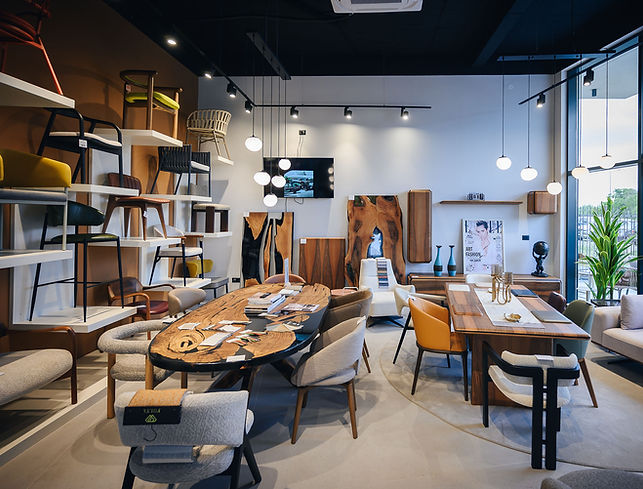


Kişiselleştirilmiş Mobilya Tasarım Hizmeti Nedir?

Some rooms look finished the moment furniture arrives. Others still feel temporary, even after every piece is in place. The difference is rarely about price alone. More often, it comes down to whether the space was shaped around the people using it. That is where a kişiselleştirilmiş mobilya tasarım hizmeti becomes valuable - not as an indulgence, but as a more considered way to live.
For design-conscious homeowners and hospitality decision-makers alike, personalization is not about adding initials to a chair or choosing a trend-driven fabric. It is about creating furniture that responds to architecture, daily rituals, circulation, mood, and identity. In a refined interior, every piece should belong to the room and to the life unfolding inside it.
Why personalized furniture feels different
Furniture chosen from a catalog can be beautiful. In the right setting, it can also be exactly enough. But there are moments when standard dimensions, standard finishes, and standard assumptions begin to limit the result. A living room with unusual proportions, a dining area that needs stronger visual rhythm, a boutique hotel suite that must feel memorable without becoming theatrical - these situations ask for more than selection. They ask for interpretation.
A personalized approach allows proportion to become intentional. A sofa is no longer just a sofa. It becomes the anchor that sets the tone of the room, balances natural light, and supports how people actually gather. A dining table stops being a standalone object and starts acting as part of a wider atmosphere, one that may need to feel intimate on weekday evenings and generous when guests arrive.
This is also why personalized furniture often reads as more luxurious. Not because it is louder, but because it feels resolved. The room appears calmer. The scale makes sense. Materials speak to one another. Nothing feels accidental.
What a kişiselleştirilmiş mobilya tasarım hizmeti includes
At its best, a kişiselleştirilmiş mobilya tasarım hizmeti is not simply custom manufacturing. It begins much earlier, with observation. The designer studies the architecture, the way the space receives light, the movement between zones, and the emotional character the client wants the interior to carry.
In a residence, that may mean understanding whether the home is used for entertaining, quiet retreat, family routines, or a blend of all three. In hospitality, the questions become even more layered. A restaurant may need seating that supports long dinners without slowing table turnover too dramatically. A hotel lounge may need to feel distinctive enough to be remembered, yet comfortable enough to invite guests to stay.
From there, the work usually moves into dimensioning, material direction, upholstery selection, finish coordination, and visual integration with the broader interior concept. This is where design authority matters. Personalization without restraint can quickly become visually busy. The goal is not to make every piece different. The goal is to make every decision feel deliberate.
Personalization is not the same as excess
One of the most common misconceptions around bespoke furniture is that it encourages complexity for its own sake. In reality, the most sophisticated interiors are often the most disciplined. They know where to hold back.
A custom bed may need a taller headboard, but not an ornate one. A made-for-space console may require a special finish, but not three competing materials. A hospitality banquette may need precise dimensions and durable elegance, yet still look effortless to the guest.
This is the trade-off worth understanding. The freedom to personalize is powerful, but it only works when guided by a clear point of view. Without that, bespoke decisions can become a collection of preferences rather than a coherent environment. The best design partner protects the integrity of the whole room, not just the individuality of each piece.
Where bespoke design makes the biggest impact
Some spaces benefit more immediately from personalization than others. Living rooms are an obvious example because proportion governs comfort so strongly. If the seating is too shallow, too deep, too low, or too dominant, the room never settles. Bedrooms also respond beautifully to custom direction, especially when the goal is softness, quiet presence, and a stronger sense of retreat.
Dining areas deserve more attention than they often receive. The right table shape can change not only circulation but the emotional quality of gathering. Round tables encourage a different kind of conversation than long rectangular ones. Pedestal bases offer another experience than four-legged forms. These are small distinctions until you live with them.
In hospitality, the effect is even more strategic. Personalized furniture can define brand identity without relying on obvious gestures. It allows a boutique property, restaurant, or café to express character through silhouette, texture, and layout rather than decoration alone. Guests may not always explain why a place feels elevated, but they notice when it does.
The balance between beauty and daily use
Luxury furniture should never feel detached from life. A beautiful piece that ignores how people sit, host, rest, work, or move through a room is incomplete. That is why the strongest personalized interiors are emotionally rich but grounded in behavior.
A family apartment may need elegant upholstery that still supports relaxed evenings. A formal reception area may require visual restraint without becoming cold. A restaurant may want dramatic design language, but chairs still need to invite guests to stay through dessert.
This is where experience matters more than novelty. Good furniture design does not force people to adapt to the object. It shapes the object around the experience the space is meant to hold. The result feels easier to inhabit, and that ease is one of the clearest signs of true refinement.
How to know if personalized furniture is right for your project
Not every room requires a fully bespoke approach. Sometimes a curated selection of existing pieces is the smarter decision, particularly when the architecture is straightforward and the design objective is clarity rather than uniqueness. Personalization becomes more compelling when the space has distinct constraints or when the desired atmosphere cannot be achieved through standard options alone.
It is often the right path when scale is difficult, when the interior must reflect a strong personal or brand identity, or when several zones need to feel connected rather than pieced together. It also makes sense when the room is central to the experience of the property, such as a primary living space, master suite, hotel lobby, or signature dining area.
The question is less, Do I need custom furniture? and more, What does this space need in order to feel complete? Sometimes the answer is one defining piece. Sometimes it is a broader design language carried across multiple elements.
Choosing a design partner, not just a furniture provider
The most successful outcomes rarely come from ordering an isolated custom piece without a wider interior perspective. Personalized furniture works best when someone is considering the room in full - architecture, palette, mood, function, and longevity.
That is why clients with a strong sense of taste still benefit from expert guidance. Knowing what you like is valuable. Knowing how to translate that into proportion, material harmony, and spatial balance is a different skill. A true design partner brings both aesthetic confidence and editorial discipline.
For clients furnishing a private residence or shaping a hospitality concept in Montenegro, this level of direction can be especially valuable when the goal is to create something internationally polished yet deeply personal. Brands such as Uniq Design operate in that space between furniture and full design vision, where selection and customization are part of a larger story about how a place should feel.
The real value of a kişiselleştirilmiş mobilya tasarım hizmeti
The deepest value is not exclusivity for its own sake. It is alignment. The room aligns with the architecture. The furniture aligns with the way people live. The visual language aligns with the identity of the home or business.
When that alignment is present, interiors feel composed rather than decorated. They carry memory more easily. They welcome people with more confidence. And they continue to feel relevant long after short-lived trends have faded.
A well-designed piece does more than fill a corner or complete a floor plan. It helps a space express who it is meant to be. That is often the difference between a room that looks finished and one that truly feels like it belongs.


Comments